

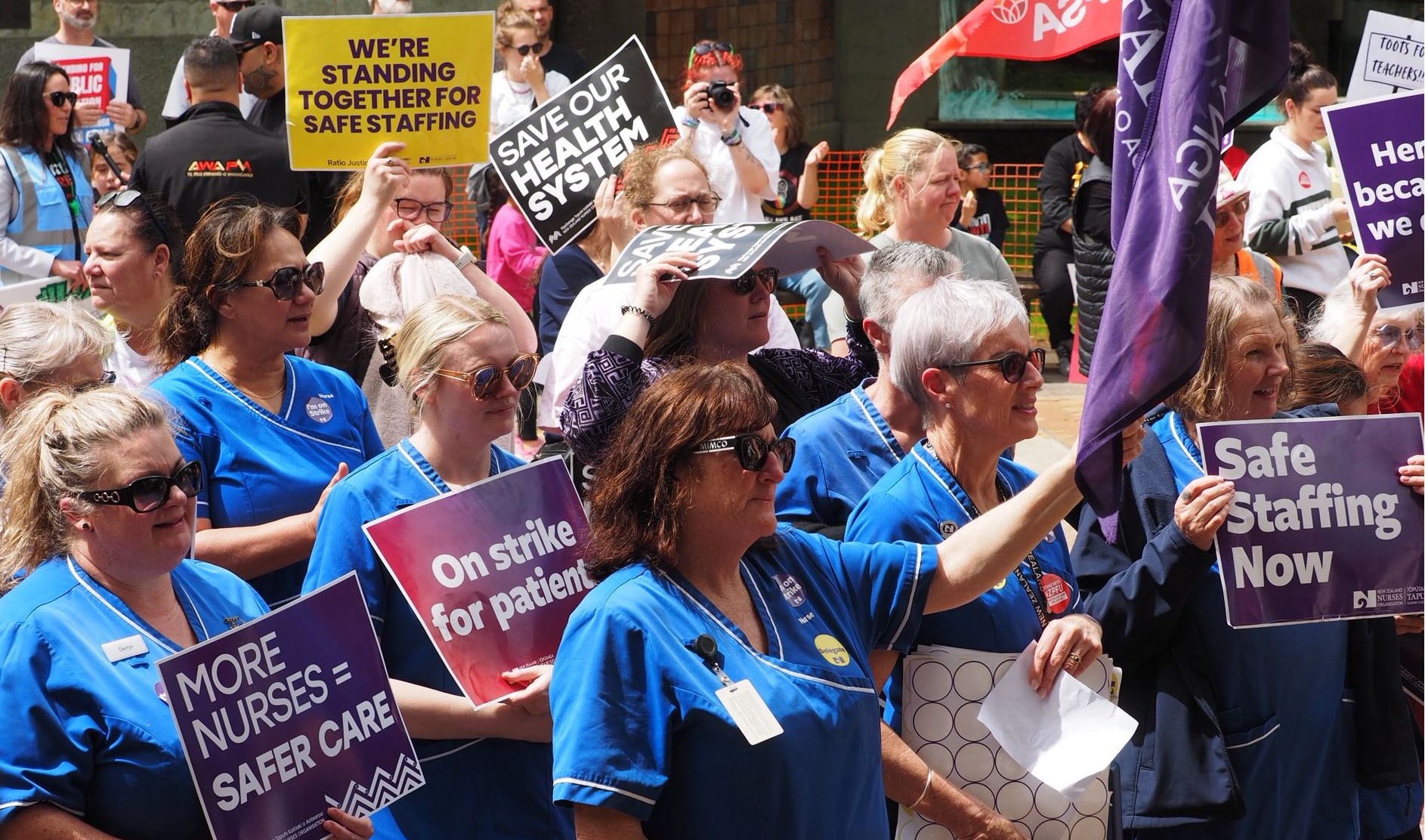
The Te Whatu Ora / NZNO Collective Agreement negotiations have now concluded. The ratification ballot closed on 15 May and it was a close vote by members to accept the proposed collective agreement.
- Te Whatu Ora /NZNO Collective Agreement 1 March 2026 – 31 October 2027
- The Te Whatu Ora Terms of Settlement (23 April 2026)
While these collective agreement negotiations are finished, NZNO members in every district will keep fighting for progress on our key issues. We will immediately begin using the following channels to continue pressure on Te Whatu Ora and the Government to value the nursing workforce and take action for safe staffing:
- Work is now underway on a number of projects that were agreed in these negotiations. This includes launching a timebound work programme to research culturally appropriate nurse-to-patient ratios. We will also use the opportunities won in bargaining to make the Care Capacity Demand Management system more transparent, enforceable and accountable. We will work with Te Whatu Ora on the implementation of the new safe staffing clause. We will continue work on the designated senior nurse pay scale review. And there is more - full details of what was achieved in bargaining can be found in the Terms of Settlement.
Find out more about all of the the Te Whatu Ora workgroups here.
- As we head into the general election campaign, Te Whatu Ora members are getting ready to campaign alongside nurses, midwives, health care assistants and kaimahi hauora working in other parts of the health sector. In recent months NZNO members across the country have been establishing the new Local Organising Group structures and these will be a key way that we plan activity to ensure public and political support for our fixes as we head into the November election.
- The new collective agreement will expire in October 2027. Preparations will begin early in the new year for the next round of negotiations.
- NZNO members have also voted in favour of the bargaining fee. To be clear a bargaining fee would not apply to NZNO members, it would apply only to Te Whatu Ora employees who work within the coverage of the collective agreement but are not members of NZNO or another union. The next step will be for Te Whatu Ora to start balloting those non-union members and the combined result of that ballot and our ballot will determine whether a bargaining fee applies to non-union members.
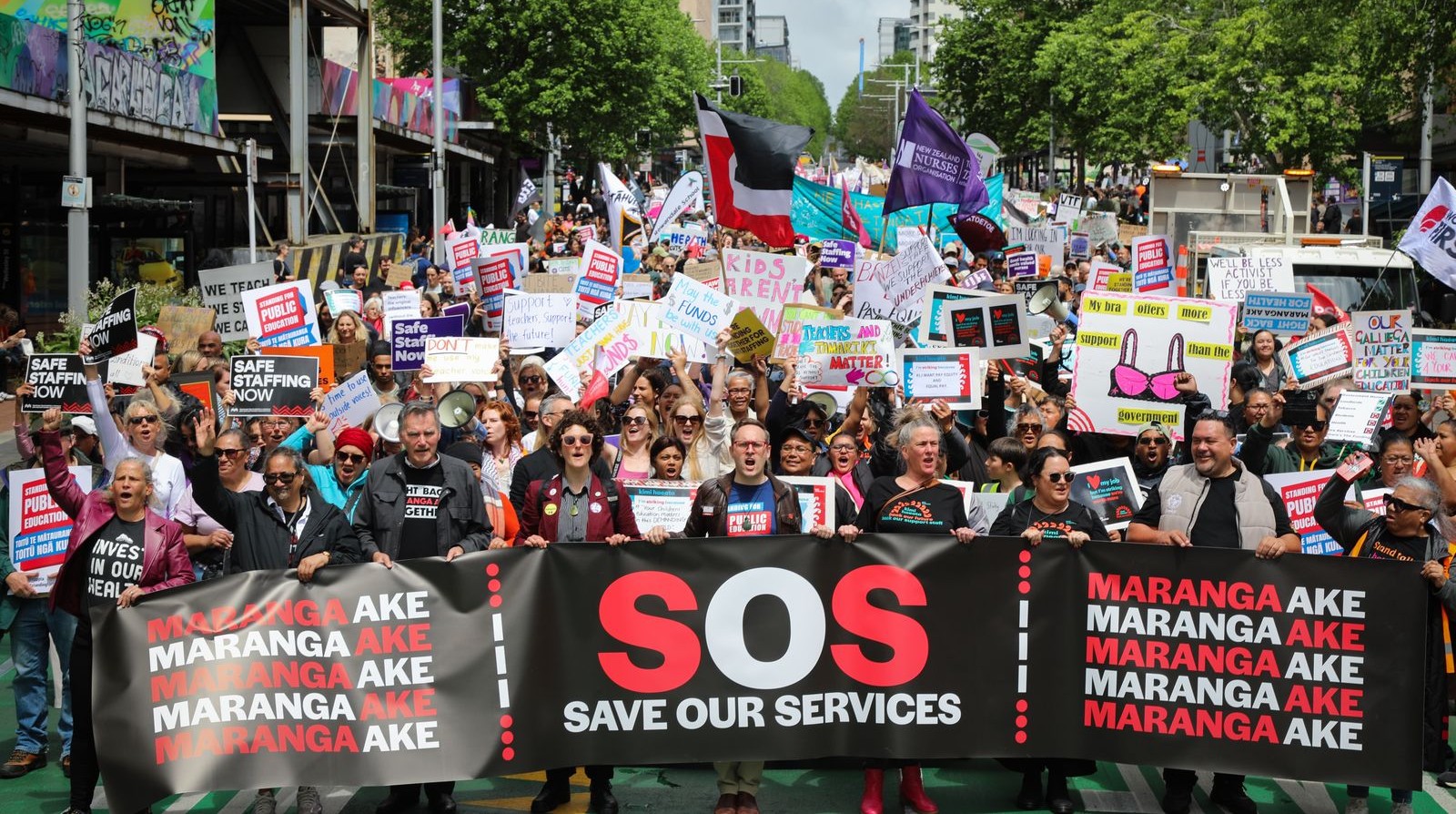
Lobbying to fix understaffing at Te Whatu Ora

Alongside industrial action, NZNO members are taking action to raise awareness of the issues in the health system by lobbying heir local MPs and sharing their stories in their communities. Health is now the second most important issue in the eyes of the NZ public and the work NZNO members have done to raise awareness of the issues in the health system is a huge part of the pressure the Government has felt on this issue. We're calling on MPs to support our solutions to fix understaffing.
NZNO’S SOLUTIONS TO FIX UNDERSTAFFING AT TE WHATU ORA
- Staff-to-patient ratios
We need Te Whatu Ora to agree to work with NZNO on a research program which will provide the evidence base needed to support the introduction of ratios alongside CCDM, thereby supporting safe staffing into the future.
- Recommit to CCDM for safe staffing
We need Te Whatu Ora to reconfirm its commitment to the CCDM programme and, in particular, complete the FTE calculations they stopped from October 2024. The FTE calculations determine a safe staffing level, based on patient need and need to be redone each year to make sure staffing levels are right.
- The full employment of new graduates
New Zealand has one of the highest proportions of Internationally Qualified nurses in the OECD and we rely heavily on these nurses to support our health system. Meanwhile, less than half of the most recent new graduate group were offered places in the new entry to practice programme by Te Whatu Ora. The first year of practice is incredibly important for new graduates to cement their learning and remain in the profession, or in New Zealand.
Click here to download the lobbying toolkit (Sept 2025 version).
Support the legal action for safe staffing at Te Whatu Ora
In November last year, NZNO filed a lawsuit against Health New Zealand arguing that the provision of safe staffing and a safe and healthy workplace is a right for all employees under our collective agreement and that Health New Zealand has breached the agreement by not providing a sufficient number of experienced staff in our hospitals.
We are now asking members around the motu that are also experiencing chronic short staffing to get involved in raising additional legal actions for each hospital. This will contribute to our ongoing collective bargaining campaign to secure enforceable, culturally appropriate nurse-to-patient ratios by enforcing our right to safe staffing under our collective agreement.
We have created an online form where members can draft their own powerful impact statements. These impact statements will form the basis of future legal actions which NZNO can file against Health New Zealand.

Timeline of the 2024-2026 Te Whatu Ora / NZNO Collective Agreement bargaining campaign |
|
|
Nov 2023 |
Member meetings to launch 2024 bargaining campaign. 38 paid union meetings for Te Whatu Ora members were held right across Aotearoa in the week of 27 November-1 December 2023. In the meetings Te Whatu Ora nurses, midwives and HCAs came together to:
|
|
Feb 2024 |
Bargaining team selected |
|
8-19 April 2024 |
Claims meetings |
|
May/June 2024 |
Member campaign actions focused on safe staffing |
|
22-26 July 2024 |
Meetings to endorse claims for bargaining |
|
29 July - 5 August |
Online claims endorsement ballot |
|
30 August 2024 |
Bargaining initiated (earliest possible date) |
|
September 2024 |
Bargaining dates with Te Whatu Ora |
|
31 October 2024 |
Current CA expires |
|
November 2024 |
Nationwide stop work meetings |
|
11-15 November 2024 |
Online strike ballot |
|
3 December 2024 |
National Te Whatu strike 11am-7pm |
|
10-19 December 2024 |
Rolling Te Whatu Ora strikes by district between December 10 and 19, from 1pm to 5pm |
|
29 January - 18 February 2025 |
Ward meetings to discuss next steps for political, legal and industrial action, including discussing ideas for continuing to build and maintain pressure through industrial action. |
|
18 February - 6 March 2025 |
District committee meetings to make recommendations for industrial action. Meetings held in every Te Whatu Ora district to consider the feedback from the ward meetings and to make recommendations for industrial action. |
| April 2025 |
Facilitation between NZNO and Health NZ |
|
3 - 13 June 2025 |
Mass stop-work meetings |
|
30 June 2025 |
Ratification offer received from Health NZ |
|
30-31 July 2025 |
National 24 hour strike |
|
2 and 4 September 2025 |
National strikes 0700-2300 |
|
23 October 2025 |
National strike 1100-1500 |
|
17-30 November 2025 |
Safe Staffing strikes |
|
Through 2025 and into early 2026 |
Localised strikes Visibility strikes |
|
9-13 February 2026 |
Bargaining update meetings |
|
9 - 13 February 2026 |
Bargaining meetings |
|
11-17 February 2026 |
Member survey |
|
30 April - 15 May 2026 |
Member meetings |
|
11 - 15 May 2026 |
Online ratification ballot |
November 2023 union meetings and launching our 2024 bargaining campaign
38 paid union meetings for Te Whatu Ora members were held right across Aotearoa in the week of 27 November-1 December 2023.
In the meetings Te Whatu Ora nurses, midwives and HCAs came together to:
- Tell the new government we expect them to deliver on fixing the nursing shortage crisis
- Understand how we will continue the fight for safe staffing in 2024 including the role of ratios
- Launch our 2024 Te Whatu Ora bargaining campaign
Media coverage of the meetings
Nurses begin fresh round of campaigning over pay and conditions
RNZ, Newstalk ZB, Newshub, Otago Daily Times, 1 News, New Zealand Herald, PMN, Northern Advocate, 27 November 2023
Nurses to campaign over pay and conditions
RNZ Audio, 27 November 2023
Aim is to put pressure on Te Whatu Ora and the new government
RNZ, 27 November 2023
Ratio Justice
Resolving the issue of insufficient staffing levels came through as the key outstanding issue following the ratification of the Te Whatu Ora Collective 2022/23. Members have been saying loud and clear that this needs to be a priority in the renewal of the collective agreement in 2024.
The longstanding problems of staffing have failed to be remedied by actions to date. In particular, while the implementation of CCDM has worked in some areas, there are still many areas where it either cannot be implemented or has not been implemented. This has placed Te Whatu Ora nurses, midwives and HCAs in dangerous situations due to lack of staff and time to do the job properly.
Overseas jurisdictions such as Queensland, Victoria, California, Ireland and British Columbia are addressing the problem of poor and dangerous staffing with the introduction of enforceable nurse-to-patient ratios. The research is clear, these ratios result in better health and safety and job satisfaction outcomes for members and better patient outcomes.
We are exploring staffing ratios that will act as a ‘safety net’, below which staffing and skill mix cannot fall, while CCDM will provide detailed staffing and skill mix which can sit above those ratios. This model is very similar to the Queensland model which is simply minimum enforceable ratios and above those ratios, flexible standards informed by CCDM. This approach keeps what works about CCDM and adds a ‘safety net’ for those areas where staffing is inadequate, or where CCDM is not implemented. This approach is broader than CCDM, covering all areas of practice. In addition, cultural requirements of Māori as patients or nurses will be taken into account in the ratios NZNO takes into bargaining next year.
Over the coming months we will develop and fine tune the ratios claim we will take into bargaining, adding a New Zealand context to what we’ve seen work internationally. There will be many opportunities for member involvement in the development of ‘Ratio Justice’.
Find out more about the Ratio Justice campaign
Enforcing our rights
Te Whatu Ora has made commitments to safe staffing in our collective agreement and has obligations to keep members safe under the Health and Safety at Work Act.
Our collective agreement includes an escalation pathway intended to alleviate acute staffing shortages, which requires direct support from Te Whatu Ora senior management and must include members and delegates. In 2021 Te Whatu Ora agreed to immediately establish and recruit to new positions recommended in annual FTE calculations. We now have another staffing clause which allows us to negotiate staffing levels even where CCDM cannot be implemented.
Over the last year we’ve increased enforcement of our rights, with health and safety reps, supported by members, issuing PIN notices, and even members taking our first ever Health and Safety strike in Tairawhiti.
Next year, alongside member action, we will increase enforcement of our rights.
We are putting Te Whatu Ora on notice – they have made commitments to us, they have obligations in law to provide a safe workplace, we will hold Te Whatu Ora to those commitments and obligations.